
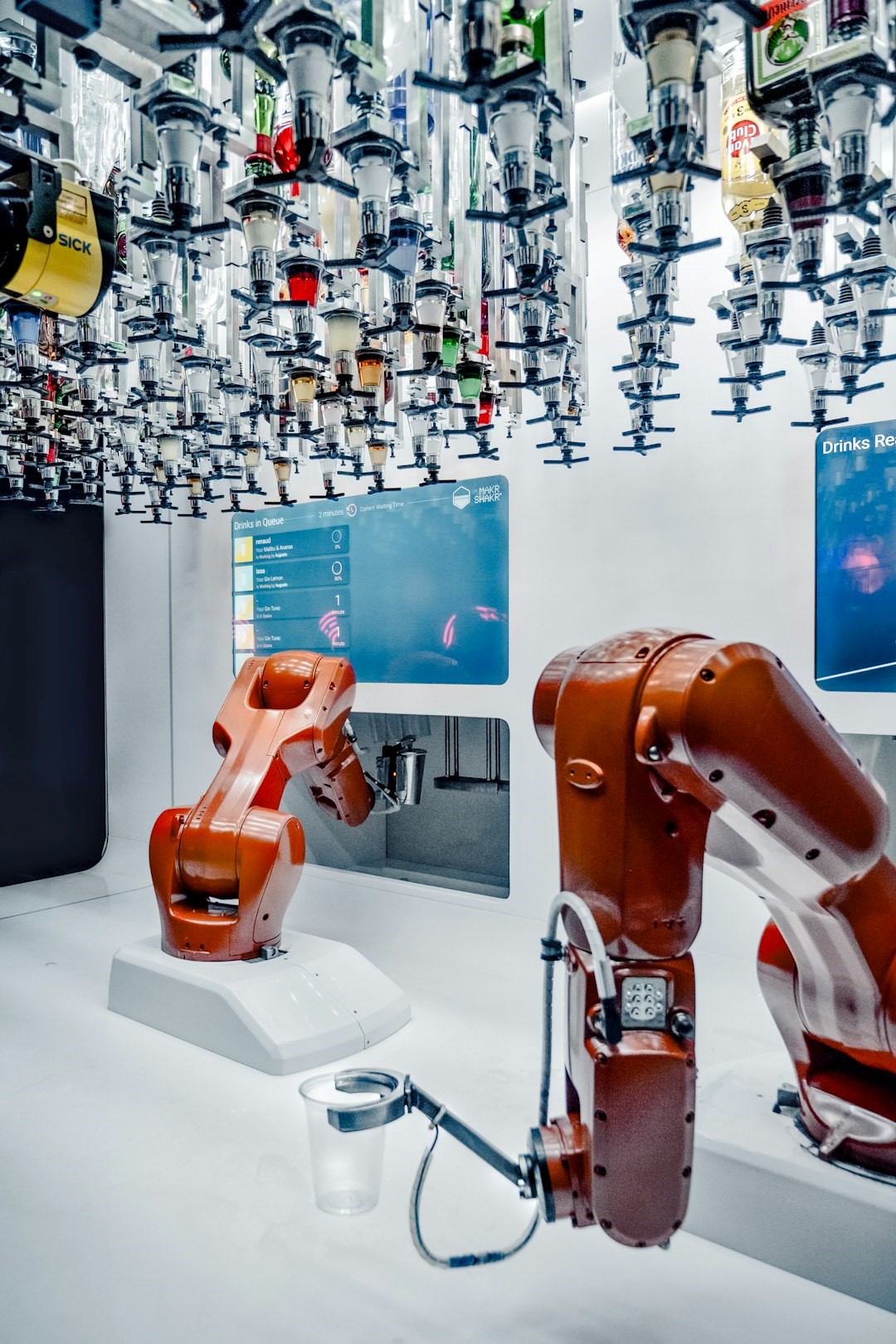
The advent of business 5G is ushering in a new era of industrial automation and robotics. This game-changing wireless technology delivers the ultra-reliable low-latency communications (URLLC), massive scalability, and seamless integration capabilities needed to power the smart factories, autonomous systems, and intelligent inventory tracking programs of the future.
In this article, we’ll explore how business 5G is transforming industrial automation and robotics, with real-world case studies, key technical foundations, and insights into the challenges and opportunities ahead. We’ll also touch on the role of private 5G networks in enabling advanced use cases and the impact of 5G-powered inventory tracking solutions.
The Technical Foundations of 5G-Enabled Automation
At the heart of business 5G‘s transformative potential lies a set of key technical capabilities:
Ultra-Reliable Low-Latency Communications (URLLC)
With latency as low as 1 millisecond, 5G URLLC ensures immediate response for mission-critical applications like:
- Real-time control of industrial robots
- Collaborative robotics (cobots)
- Safety systems and emergency shutdowns
This level of responsiveness is vital for precision manufacturing, autonomous vehicles, and human-machine collaboration.
Massive Machine-Type Communications (mMTC)
5G mMTC supports connection densities of up to 1 million devices per square kilometer, enabling:
- Pervasive IoT sensor networks
- Process automation
- Predictive maintenance
- Asset tracking
This massive scalability is essential for realising the vision of fully connected, data-driven smart factories.
Enhanced Mobile Broadband (eMBB)
With multi-gigabit data rates, 5G eMBB enables:
- High-speed transmission of HD/4K video streams
- Transfer of large industrial datasets
- Real-time analytics for quality control
These capabilities open up new possibilities for remote monitoring, AI-driven inspection, and augmented reality (AR) applications in industrial settings.
Real-World Use Cases: Business 5G in Action
Across industries, enterprises are harnessing business 5G to automate complex processes, enhance operational efficiency, and unlock new levels of productivity. Here are some compelling examples:
Smart Factories and Process Automation
- MTU Aero Engines (Germany): Deployed 5G to automate production of jet engine components, reducing manufacturing time by 75% through advanced robotics and real-time process control.
- Audi & Ericsson: Implemented 5G URLLC-enabled robot cells at Audi factories, where robots can instantly halt operations if a human enters the cell, improving safety and flexibility.
- Haier (China): Using 5G and edge computing for machine vision, with industrial cameras scanning products for defects and transmitting high-resolution images in real-time for AI-driven quality control.
Robotics and Autonomous Systems
- KT Corp & Hyundai Engineering: Developed 5G infrastructure for construction site automation, with robots deployed over 5G for material movement, site monitoring, and hazardous task automation.
- Boston Dynamics: 5G-connected robots like Spot enable autonomous inspection and monitoring in challenging industrial environments, with real-time video transmission and remote control.
- Verison & RealBotics: The tele-robotics platform allows remote operation of factory robots over 5G, with real-time AR interfaces and haptic feedback.
The Rise of Private 5G Networks
While public 5G networks offer significant benefits, many industrial enterprises are turning to private 5G deployments to enable advanced use cases with greater control, security, and performance.
Key advantages of private 5G include:
- Guaranteed performance: Ultra-low latency, high reliability, and dedicated bandwidth for mission-critical automation.
- Security and control: Complete enterprise control over data, network access, and security policies.
- Customisable network slicing: Tailored “slices” for time-sensitive automation, robotics control, real-time video analytics, and other applications.
- Local edge processing: Integration of Multi-access Edge Computing (MEC) for AI, machine vision, inventory tracking, and predictive analytics.
Real-world examples like Schneider Electric’s smart factory in Shanghai demonstrate the impact of private 5G, with the network enabling remote AR support, increasing production line load rates to 80%, and reducing required space by 50%.
Transforming Inventory Management with 5G
In addition to powering automation and robotics, business 5G is revolutionising inventory tracking programs through real-time visibility, accuracy, and efficiency.
Key applications include:
- IoT sensors: 5G-connected RFID tags, barcode scanners, and environmental sensors for tracking goods’ location, condition, and movement.
- Machine vision: High-resolution cameras and AI algorithms for processing images of inventory on production lines, in warehouses, and on shipping docks.
- AGVs and drones: Automated Guided Vehicles and drones leveraging 5G for navigation, item picking, and stock counting in large facilities.
- Cloud and edge analytics: Real-time inventory data transmitted via 5G and analysed locally (edge/MEC) or centrally (cloud) for optimisation and demand forecasting.
These 5G-powered inventory tracking solutions deliver significant business benefits, such as:
- Real-time visibility: Instant updates on stock levels and locations to prevent stockouts and overstocking.
- Accuracy: Automated tracking reduces human error, with AI verifying counts and detecting anomalies.
- Efficiency: AGVs and robots autonomously move goods, replenish shelves, and conduct checks, reducing labour costs and time.
Challenges and Considerations
While the potential of business 5G in industrial automation and robotics is immense, enterprises must navigate several challenges and considerations:
- Spectrum licensing: Deployments must comply with local regulations on spectrum use, with private 5G networks often requiring special licensing.
- Cybersecurity: Wireless industrial networks must employ robust encryption and segmentation to protect against cyber threats.
- Integration complexity: Migrating legacy equipment to 5G connectivity requires careful planning and compatible hardware/software investments.
- Skills and expertise: Enterprises need specialised IT/OT personnel to manage and secure 5G networks and integrated systems.
Final Words
Business 5G is undeniably transforming industrial automation and robotics, enabling smart factories, autonomous systems, and intelligent inventory tracking programs that deliver unprecedented levels of efficiency, flexibility, and productivity.
As real-world deployments demonstrate, 5G’s ultra-reliable low latency, massive scalability, and seamless integration capabilities are powering use cases like real-time robotics control, AI-driven quality inspection, remote monitoring, and flexible production—reshaping industries from manufacturing to mining to logistics.
Private 5G networks further enhance these possibilities, giving enterprises the control, security, and guaranteed performance needed for mission-critical operations.